
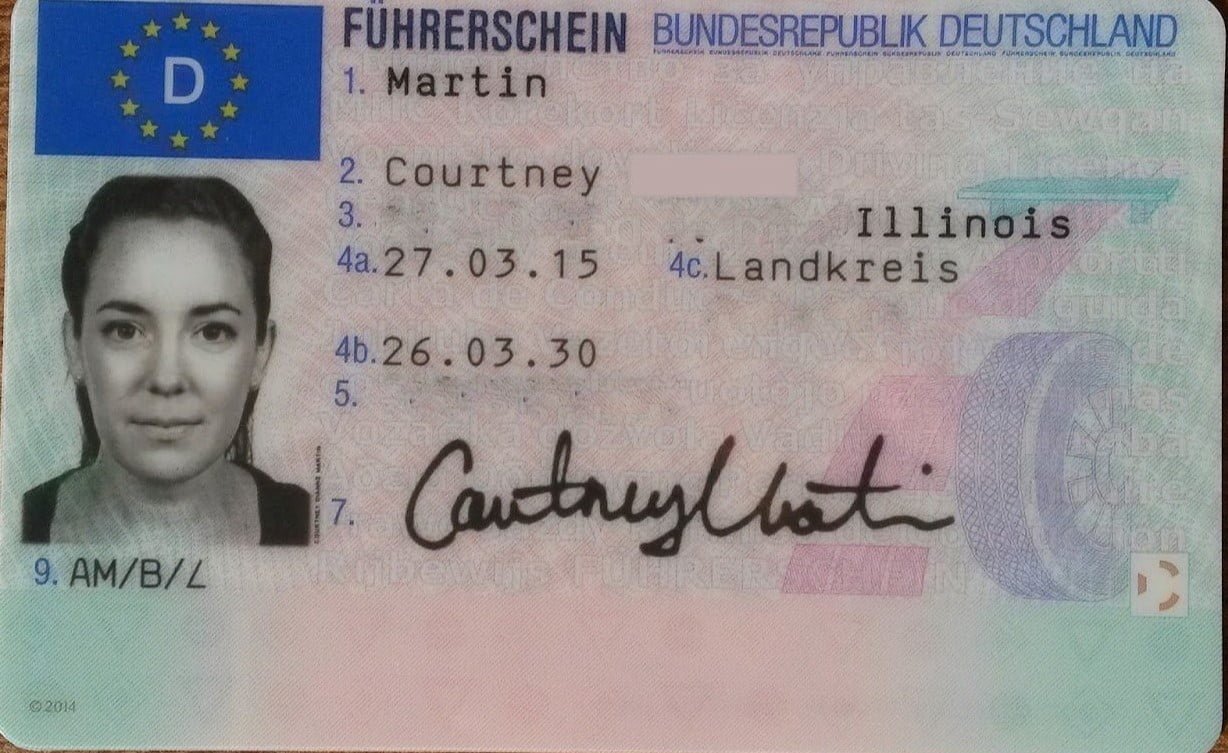
Buy a German Driving License

Are you in need of a real or fake German driving license? A German driving license (Führerschein) is an official document that allows the holder to legally drive in Germany and, in most cases, throughout the European Union (EU) and other countries. Whether you’re moving to Germany, planning to drive there temporarily, or simply curious about the licensing process, this comprehensive guide covers the essentials of obtaining and using a German driving license.
German Driving License: Everything You Need to Know
A German driving license (Führerschein) is an official document that allows the holder to legally drive in Germany and, in most cases, throughout the European Union (EU) and other countries. Whether you’re moving to Germany, planning to drive there temporarily, or simply curious about the licensing process, this comprehensive guide covers the essentials of obtaining and using a German driving license.
Types of German Driving Licenses
There are several types of German driving licenses, depending on the vehicle categories you are permitted to drive. The most common types include:
1. Class B License (Car License)
- The Class B license is the most common and allows you to drive cars with a maximum weight of 3,500 kg and up to 8 passenger seats (excluding the driver).
- With this license, you can also tow trailers up to 750 kg or more, provided the total weight does not exceed 3,500 kg.
2. Class A License (Motorcycle License)
- Class A licenses are divided into sub-categories for different engine capacities:
- A1: For motorcycles with an engine up to 125cc and a power output of no more than 11 kW.
- A2: For motorcycles with an engine up to 35 kW.
- A: Allows the holder to drive all types of motorcycles.
3. Class C License (Truck License)
- A Class C license allows you to drive large trucks (over 3.5 tons) and includes sub-categories for different truck sizes and purposes (e.g., C1 for trucks between 3.5 and 7.5 tons).
- For commercial truck driving, an additional Code 95 certification may be required.
4. Class D License (Bus License)
- The Class D license is required for driving buses that carry more than 8 passengers (excluding the driver).
- Like the truck license, certain sub-categories exist for different bus sizes and weight limits.
5. Other Licenses
- There are also driving licenses for special vehicles (such as tractors and forklifts) under the Class L, M, or T categories.
Eligibility for a German Driving License
1. Age Requirement
- The minimum age for obtaining a Class B (car) driving license in Germany is 18 years.
- For motorcycles (Class A), the age requirements vary:
- A1: Minimum age of 16.
- A2: Minimum age of 18.
- A: Minimum age of 24 (unless you’ve held an A2 license for at least two years).
2. Residency Requirements
- To apply for a German driving license, you must be a resident of Germany. If you are a foreign national, you may need to provide proof of your legal residency.
3. Health Requirements
- Applicants must pass a medical exam to ensure they are fit to drive. This includes an eyesight test and, in some cases, a hearing test. Those with certain medical conditions may be required to submit a medical report or undergo additional checks.
4. Driving Experience
- If you already have a driving license from another country, the process of converting your foreign license to a German one may be simpler. Some non-EU citizens may need to take both a written and practical driving test.
How to Apply for a German Driving License
Step 1: Enroll in a Driving School (Fahrschule)
- The first step in applying for a German driving license is to enroll in a driving school (Fahrschule). Driving schools in Germany provide both theoretical lessons and practical driving lessons. You can choose from a range of driving schools, which are regulated by the government to ensure high standards.
- The cost of driving school varies depending on the region, the number of driving lessons required, and the type of license you are applying for. Expect to pay between €1,500 and €2,500 for the full course.
Step 2: Complete Theoretical Training
- Theoretical lessons cover road signs, traffic laws, and safe driving practices. These lessons are generally provided in a classroom setting and are mandatory.
- You must pass a written theory exam before being allowed to take the driving test. The exam consists of 30 multiple-choice questions and is offered in several languages, including English.
Step 3: Complete Practical Training
- Practical driving lessons are required to ensure that you can operate a vehicle safely. During these lessons, you will be guided by a qualified instructor who will teach you how to drive in various traffic conditions and perform maneuvers such as parking, lane changes, and highway driving.
- In total, most applicants need between 20 and 40 lessons to pass the test, but this depends on your prior experience and comfort with driving.
Step 4: Take the Theory Exam
- After completing your theoretical training, you must take and pass the theory exam at the local driving license office (Führerscheinstelle).
- The exam is in multiple-choice format and tests your knowledge of the German traffic rules and road signs. You must score at least 90% to pass.
Step 5: Take the Practical Driving Test
- Once you have passed the theory exam, you can schedule the practical driving test. This test is conducted with a driving examiner who will assess your ability to drive safely and follow traffic rules.
- You must demonstrate your skills in a real-world driving environment, including city streets, highways, and potentially challenging situations such as parking, merging, and stop-and-go traffic.
- Upon successful completion of the practical exam, you will receive your German driving license.
Step 6: Pay the Fees
- The application fee for a German driving license varies, but it generally ranges between €200 to €300 for the entire process, including the driving school fees, exam fees, and administrative costs.
Requirements for Foreigners: Converting a Foreign License to a German Driving License
If you already hold a driving license from another country, you may be eligible to convert it to a German driving license, provided you meet the following requirements:
1. EU/EEA Citizens
- If you have a driving license from another EU/EEA country, you do not need to take a driving test in Germany. You simply need to register your license at the local driving license office (Führerscheinstelle) and exchange it for a German license.
2. Non-EU Citizens
- If you are a non-EU citizen and hold a valid foreign driving license, you may be able to convert your license to a German one without taking the driving test. However, this depends on your home country. Some countries have agreements with Germany that allow for a straightforward exchange, while others may require you to take both a theory and practical test.
3. License Expiry
- If your foreign license has expired, you will need to pass both the theoretical and practical exams in Germany.
Driving License Validity and Renewals
- German driving licenses are valid for 15 years for all types of vehicles. After this period, you must renew your license. However, the process for renewal involves updating your photo and possibly undergoing a vision test, but it does not require you to retake the driving test.
- If you change your name, address, or personal details, you must apply for a new license at the local Führerscheinstelle.
German Driving License for Foreign Visitors
If you are visiting Germany temporarily and already hold a valid driving license from your home country, you can generally drive in Germany for up to six months without the need for a German driving license. If you are from an EU/EEA country, your license is valid in Germany, and if you are from a non-EU country, you may need an International Driving Permit (IDP) in addition to your foreign license.
Conclusion
Obtaining a German driving license is a comprehensive process that requires both theoretical and practical training. With the ability to drive a car, motorcycle, truck, or bus, the German driving license is a versatile and widely recognized document, especially within the EU. Whether you’re moving to Germany or planning to drive there temporarily, understanding the process and requirements of the German driving license will ensure you’re well-prepared to navigate the roads safely and legally.
Be the first to review “Buy a German Driving License”
Related products
Buy-driving-license
Buy a US Driver’s License | American Driving Licence for Sale
Buy-driving-license
Buy-driving-license
Buy-driving-license

Buy-driving-license
Buy-driving-license

Buy-driving-license
Buy-driving-license
Reviews
There are no reviews yet.