
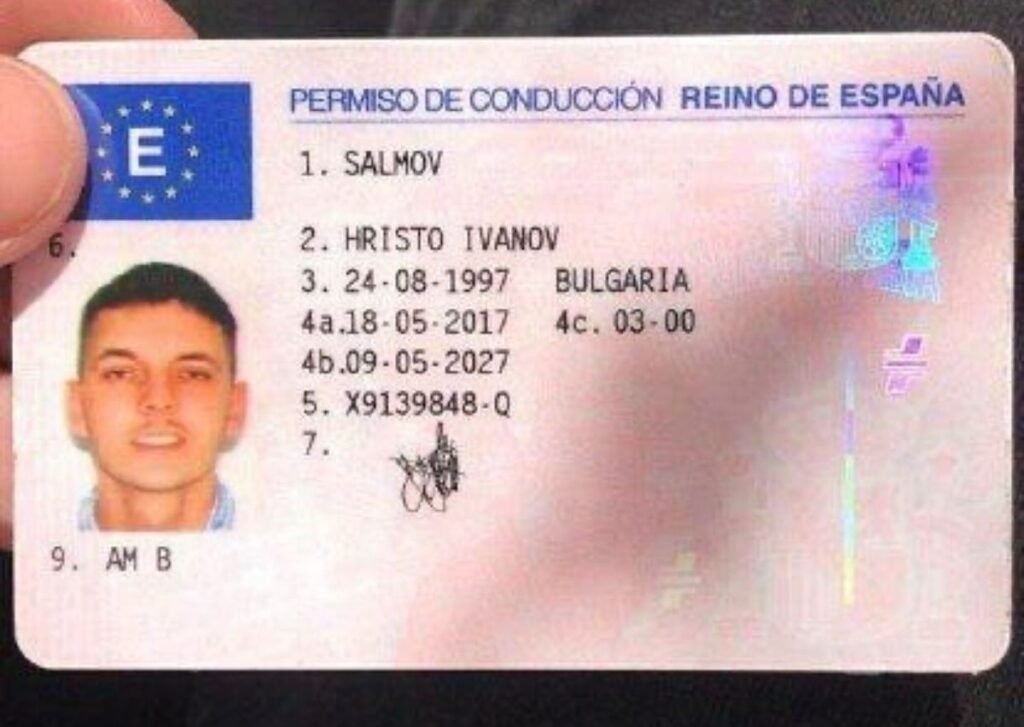
Buy a Spanish Driving License
Looking to buy a real or a fake Spain driver’s license without exam? The Spanish driving license (permiso de conducir) is an essential document for anyone who wants to drive legally in Spain. Whether you’re a resident or a visitor, understanding the process to obtain, renew, or exchange your Spanish driving license is crucial. This guide will walk you through all the information you need to know about the Spanish driving license, including how to apply, its requirements, and the benefits it provides.
Spanish Driving License: Everything You Need to Know
What Is a Spanish Driving License?
The Spanish driving license is an official document issued by the General Directorate of Traffic (Dirección General de Tráfico, DGT), which is the government body responsible for regulating road safety in Spain. This license authorizes individuals to drive motor vehicles, including cars, motorcycles, trucks, and buses, depending on the category of the license issued.
There are two main types of Spanish driving licenses:
- National Spanish Driving License: Issued to Spanish citizens or residents.
- International or Exchange License: For foreign nationals, especially for those from non-EU countries, to exchange their foreign driving license for a Spanish one.
Types of Spanish Driving Licenses
Spanish driving licenses are classified by the type of vehicle you are allowed to drive. Each license corresponds to specific categories of vehicles:
- Category B – Cars
- This is the most common type of license, allowing the holder to drive cars, vans, and small trucks.
- Minimum Age: 18 years old.
- Validity: 10 years for those under 65; 5 years for those over 65.
- Category A – Motorcycles
- There are subcategories (A1 and A2) based on the engine size and experience required.
- A1: Allows driving motorcycles up to 125cc (minimum age 16).
- A2: Allows driving motorcycles up to 35kW (minimum age 18).
- A: Full motorcycle license (minimum age 20 for those with two years of A2 experience).
- Category C – Heavy Vehicles (Trucks)
- For driving vehicles over 3,500 kg (large trucks and buses).
- Minimum Age: 21 years old.
- Category D – Buses
- For driving buses with more than 9 seats.
- Minimum Age: 24 years old.
- Category BE, CE, DE – Combination Licenses
- For driving vehicles in combination with trailers or semi-trailers.
How to Apply for a Spanish Driving License
Step 1: Meet the Eligibility Requirements
To apply for a Spanish driving license, you must meet the following basic requirements:
- Age: The minimum age depends on the vehicle category (typically 18 for Category B – cars).
- Residency: You must be a resident of Spain, and if you’re a foreigner, you should be legally registered in Spain and have lived in the country for a certain period (usually at least 6 months for non-EU citizens).
- Medical Fitness: You must pass a medical exam to confirm that you are physically fit to drive. This exam is usually conducted by an authorized doctor in Spain.
Step 2: Enroll in a Driving School
In Spain, to obtain a driving license, you must take lessons at an accredited driving school (autoescuela). The driving school will guide you through the necessary theory and practical training. The school will also help you with the process of applying for the license.
- Theory Lessons: You will need to learn road rules, traffic signs, safety regulations, and the responsibilities of being a driver. The theory exam is a written test.
- Practical Lessons: You must take practical driving lessons with an instructor to prepare for the driving test. These lessons typically last several hours depending on your learning pace.
Step 3: Pass the Medical Exam
Before you can take the theory and practical tests, you must pass a medical exam. This exam ensures that you do not have any physical or mental conditions that would impair your ability to drive. It covers your vision, hearing, reflexes, and overall health.
Step 4: Take the Theory Test
The theory test consists of 30 multiple-choice questions on topics such as:
- Road signs and their meanings.
- Traffic rules and regulations.
- Safe driving practices.
- Emergency procedures.
You must answer at least 27 questions correctly to pass. The test is taken on a computer, and you can take it in multiple languages.
Step 5: Take the Practical Driving Test
Once you have passed the theory exam, you can take the practical driving test. The test will be conducted in a car provided by the driving school or your own vehicle. The examiner will assess your ability to:
- Operate the vehicle safely and responsibly.
- Navigate through various road situations, including traffic signals, roundabouts, pedestrian crossings, etc.
- Perform parking, turning, and reversing maneuvers.
You must pass both the theory and practical tests to receive your Spanish driving license.
Step 6: Receive Your Spanish Driving License
After passing both exams, you will be issued a provisional driving license. This provisional license is valid for 3-6 months, and after this period, you will receive your official Spanish driving license. The license will be valid for 10 years if you are under 65 and will need to be renewed at that time.
How to Exchange a Foreign Driving License for a Spanish One
If you already hold a driving license from another country, you may be able to exchange it for a Spanish license without having to retake the driving tests. This is possible if:
- You are a citizen of an EU/EEA country, in which case you can exchange your license directly.
- You are from a non-EU country that has a reciprocity agreement with Spain, such as Argentina, Chile, or Japan.
Be the first to review “Buy a Spanish Driving License”
Related products
Buy-driving-license

Buy-driving-license

Buy-driving-license

Buy-driving-license
Buy-driving-license
Buy-driving-license
Buy a US Driver’s License | American Driving Licence for Sale
Buy-driving-license

Buy-driving-license
Reviews
There are no reviews yet.