
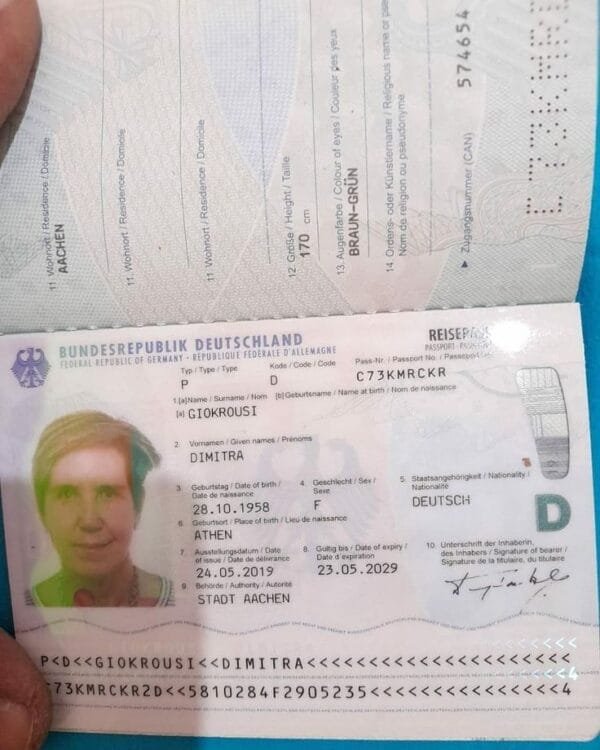
Buy a German Passport (Germany)

Looking to buy a real or fake Germany passport? The German passport is an essential travel document for German citizens, allowing them to travel internationally and serve as official proof of German citizenship. Whether you’re planning to travel abroad, looking to apply for your first passport, or considering renewing your current one, this comprehensive guide will cover all the necessary details about obtaining a German passport, including eligibility, the application process, and important features.
Buy a German Passport | What is the German Passport?
The German passport (Reisepass) is an official government-issued document that certifies the holder’s identity and nationality. It is used primarily for international travel, but it also serves as proof of German citizenship. The passport is recognized worldwide and is one of the strongest passports in terms of global mobility, granting visa-free access to numerous countries.
Types of German Passports:
There are two primary types of German passports:
1. Standard German Passport (Reisepass)
- This is the regular passport issued to German citizens for international travel.
- The standard passport is valid for 10 years for adults (18 and older) and 6 years for children (under 18).
2. Temporary German Passport (Notpass)
- If you need a passport urgently and cannot wait for the processing of a regular passport, you can apply for a temporary German passport (Notpass).
- It is typically valid for one year and is issued in special circumstances, such as a lost passport or travel emergency.
Eligibility for a German Passport
To apply for a German passport, you must meet the following eligibility criteria:
1. German Citizenship
- You must be a German citizen to apply for a German passport. You can acquire German citizenship by birth, descent, or naturalization.
- Dual citizenship is allowed in certain cases, but you must prove your German citizenship when applying for a passport.
2. Age Requirements
- Adults (18 and older) are eligible to apply for the full 10-year passport.
- Children under 18 can also apply for a passport, but it will be valid for only 6 years.
3. Proof of Identity
- You must provide valid proof of identity, such as a birth certificate, identity card, or previous passport, when applying for a German passport.
4. Residency
- If you reside in Germany, you can apply for a passport through the local registration office (Einwohnermeldeamt) or the passport office (Passamt).
- If you live abroad, you can apply for a German passport at the nearest German consulate or embassy.
How to Apply for a German Passport
Step 1: Gather Required Documents
Before applying for a German passport, ensure you have all the necessary documents:
- Proof of German Citizenship: This can be your birth certificate, naturalization certificate, or a German identity card (Personalausweis).
- Proof of Residence: If applying within Germany, you may need a recent registration certificate (Meldebescheinigung) from your local authorities.
- Passport-Style Photo: You will need to provide a recent biometric photo that meets German passport requirements. The photo should be color, clear, and neutral, showing your face without any headgear (except for religious reasons).
- Previous Passport (if applicable): If you are renewing or replacing an expired passport, you will need to submit your old passport. If lost, report the loss to the police and provide the police report.
- Application Form: The application form is available online or at the passport office, and it must be filled out before submission.
Step 2: Submit the Application
- You can submit your application in person at your local passport office in Germany or at the nearest German embassy or consulate if you are living abroad.
- In Germany, you may need to make an appointment in advance, especially in larger cities, to avoid long wait times.
Step 3: Pay the Application Fee
- The cost for a German passport depends on its validity:
- For adults (10-year passport): The fee is around €60.
- For children (6-year passport): The fee is around €37.
- Temporary passport (Notpass): The fee for a temporary passport can be around €30 to €50, depending on urgency and location.
- Additional fees may apply for expedited processing or extra services, such as express delivery.
Step 4: Wait for Processing
- The processing time for a regular passport is typically around 4 to 6 weeks in Germany. If you are applying from abroad, it may take a few weeks longer.
- Temporary passports can often be issued much more quickly, sometimes within a few days or one week, depending on your situation.
Step 5: Pick Up Your Passport
- Once your passport is ready, you will be notified, and you can pick it up at the office where you submitted your application.
- If you are abroad, you may have the option to have your passport mailed to you, or you may need to pick it up at the embassy or consulate.
Features and Security of the German Passport
The German passport incorporates advanced security features to protect against fraud and unauthorized access. These features include:
1. Biometric Data
- The German passport contains biometric data, including a digital facial image and fingerprints. This data is stored in a microchip embedded in the passport.
- Biometric data is used for border control and for verifying the identity of the passport holder.
2. High-Quality Printing and Watermarks
- The passport is made from polycarbonate, which is durable and resistant to tampering.
- It includes watermarks, microprinting, and holograms, making it difficult to counterfeit.
3. Visa Pages
- The German passport has numerous visa pages, where you can affix entry and exit stamps from various countries, as well as visas.
- You can typically expect to have 32 pages in a standard passport.
4. Electronic Features
- The ePassport is an electronic version of the traditional passport, which contains a chip storing your personal information and biometric data.
- This chip allows for faster and more secure border crossings in many countries.
Benefits of the German Passport
The German passport provides a wide range of benefits, including:
1. Global Travel Freedom
- The German passport is one of the strongest passports in the world, offering visa-free or visa-on-arrival access to over 190 countries, including all Schengen Area countries, the United States, and many Asian and South American nations.
2. Proof of Citizenship
- The German passport serves as official proof of German citizenship, which is essential for accessing various governmental services and benefits within Germany, such as social security, healthcare, and voting.
3. Dual Citizenship
- Germany allows dual citizenship in certain cases, meaning you can hold a German passport in addition to a passport from another country, depending on the laws of your other nationality.
4. Access to EU Benefits
- As a German citizen, you are entitled to all the benefits provided by the European Union, including free movement, the ability to work in any EU country, and healthcare benefits under the EU’s European Health Insurance Card (EHIC) scheme.
Renewing a German Passport
Your German passport is valid for 10 years (for adults) or 6 years (for children), and after this period, it will need to be renewed. The process for renewing a German passport is similar to the application process for a new one, with the primary difference being that you will need to submit your old passport as part of the renewal.
To renew your German passport:
- Gather required documents (current passport, photo, proof of identity, etc.).
- Submit the application at your local passport office.
- Pay the renewal fee (typically €60 for adults).
- Wait for processing (typically 4-6 weeks).
- Pick up the renewed passport.
Conclusion
The German passport is a valuable document for German citizens, providing a wealth of international travel opportunities and official proof of citizenship. With its robust security features, global travel access, and benefits within the European Union, the German passport is one of the most powerful passports worldwide. Whether you’re applying for your first passport, renewing it, or replacing a lost one, understanding the process and requirements will ensure a smooth and efficient experience.
Be the first to review “Buy a German Passport (Germany)”
Related products
Buy Passports
Buy Passports
Buy Passports
Buy Passports
Buy Passports
Buy Passports
Buy Passports
Buy Passports
Reviews
There are no reviews yet.